Hi all,
I wanted to let you know about an once in a lifetime exhibit coming to the Metropolitan Museum of Art this fall, Running from November 13 through February 12, 2018. The exhibit, titled: Michelangelo: Divine Draftsman and Designer, will feature 150 drawings and three sculptures by the world renowned Michelangelo.
The legendary artist is most famously known for his sculpture David, as well as his work in the Sistine Chapel. The David is one of the most recognizable pieces of art in the entire world, and attracts millions of visitors each year. the website Gothamist reports that the exhibit will feature "[Michelangelo's] earliest painting, his wood architectural model for a chapel vault, the complete series of masterpiece drawings he created for his friend Tommaso de’Cavalieri and a monumental cartoon for his last fresco in the Vatican Palace."
If you are in New York this fall, I highly recommend visiting this exhibit. I know I will be going!
Friday, May 26, 2017
Sunday, May 7, 2017
Sunday UNESCO Spotlight: Uluru
Good morning everyone!
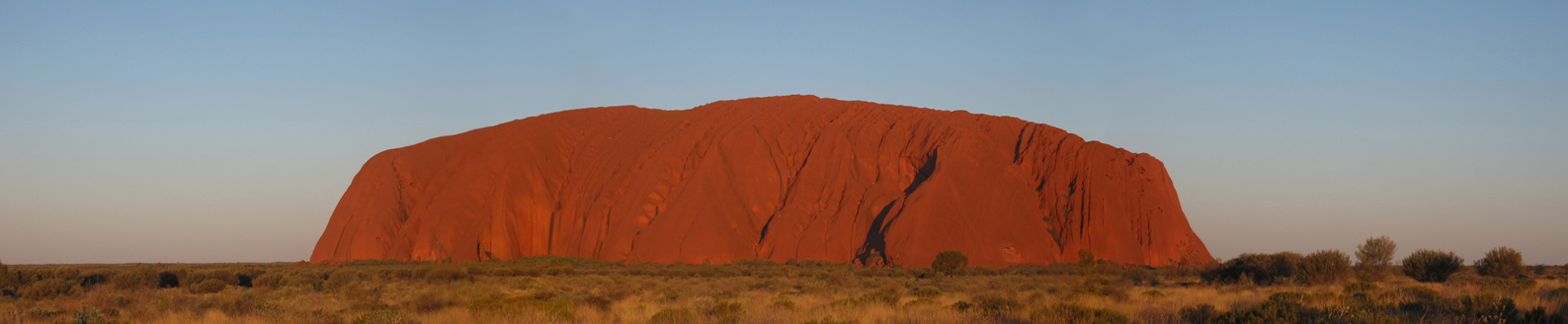
For this Sunday's edition of UNESCO spotlight, I decided to change things up and focus on a non-human site, Uluru-Kata Tjuta National Park. For many of us, the site is first known by the name of Ayer's Rock, given to the site in 1873 by William Goose, in honor of Sir Henry Ayers. Until 2002, the primary name for the rock was listed as Ayer's Rock/Uluru, but was reversed by request the Regional Tourism Association. This was to give more recognition to the religious and cultural importance of the site to the Aboriginal people of Australia.
Uluru stands 348 meters tall, and is made out of a red sandstone. While appearing incredible tall to the eye, most of the structure actually lies underground. While visitors are not forbidden from climbing the structure, they are advised against it by the local Aṉangu people, do the significance of the site as well as their interest in the safety of the visitors.
The Encyclopedia of Sacred Places by Norbert Brockman describes a famous myth related to the creation of Uluru:
Sources Cited:
For this Sunday's edition of UNESCO spotlight, I decided to change things up and focus on a non-human site, Uluru-Kata Tjuta National Park. For many of us, the site is first known by the name of Ayer's Rock, given to the site in 1873 by William Goose, in honor of Sir Henry Ayers. Until 2002, the primary name for the rock was listed as Ayer's Rock/Uluru, but was reversed by request the Regional Tourism Association. This was to give more recognition to the religious and cultural importance of the site to the Aboriginal people of Australia.
Uluru stands 348 meters tall, and is made out of a red sandstone. While appearing incredible tall to the eye, most of the structure actually lies underground. While visitors are not forbidden from climbing the structure, they are advised against it by the local Aṉangu people, do the significance of the site as well as their interest in the safety of the visitors.
The Encyclopedia of Sacred Places by Norbert Brockman describes a famous myth related to the creation of Uluru:
The first [tale] tells of serpent beings who waged many wars around Uluru, scarring the rock. The second tells of two tribes of ancestral spirits who were invited to a feast, but were distracted by the beautiful Sleepy Lizard Women and did not show up. In response, the angry hosts sang evil into a mud sculpture that came to life as the dingo. There followed a great battle, which ended in the deaths of the leaders of both tribes. The earth itself rose up in grief at the bloodshed, becoming Uluru.
Uluru and the surrounding area were not returned to the Aṉangu who originally owned the land until 1985. An important victory for Indigenous people in both Australia and around the world. Many such monuments and pieces of art are still held by those who took them from their native peoples without express permission, it is important to continue the goal of returning such items back to their rightful owners.
For more information on Uluru, please visit UNESCO's page on the site
Sources Cited:
- Brockman, Norbert C (June 1997). Encyclopedia of Sacred Places. Santa Barbara, California: ABC-Clio Inc. pp. 292–93. ISBN 0-19-512739-0.
Sunday, April 23, 2017
Sunday UNESCO Spotlight: Himeji-Jo
Welcome back to another edition of UNESCO Spotlight. This Sunday is focused on the famous Himeji castle, the largest castle in Japan.
Built in the 17th century, Himeji castle is the center of what has been an important transportation hub since ancient times. The castle was an important seat of power from its construction up until the end of the feudal period in 1871. The castle was then abandoned and put up for sale. The castle is also know by the name of "White Heron Castle", due to its white exterior and shape evoking the image of a bird taking flight.
The castle complex was declared a UNESCO World Heritage Site in 1993, with five castle structures also being declared national treasures by the government of Japan. as quoted from UNESCO's site: "The principal complex of these structures is a masterpiece of construction in wood, combining function with aesthetic appeal, both in its elegant appearance unified by the white plastered earthen walls...and in the subtlety of the relationships between the building masses and the multiple roof layers visible from almost any point in the city".
For more information on Himeji-Jo, please visit UNESCO's page dedicated to the site
Saturday, April 1, 2017
Sunday UNESCO Spotlight: Borobodur
This week's UNESCO spotlight is on one of the top items on my bucket list to see: the temple of Borobodur. Located on the island of Java in Indonesia, Borobodur is the largest Buddhist temple in the world.
The temple, built in the 8th and 9th centuries is one of the best examples of the Stupa temple of Buddhism. Possessing three tiers, the temple is a map of the universe according to Buddhist cosmology. Borobodur is famous for its various sculptures and reliefs, some of the best to be found in Indonesia. While there have been problems of looting of said art in the past, organizations like UNESCO have been working to make sure what remains is preserved, and to hopefully return art pieces to their rightful home.
For more information on Borobodur, please visit UNESCO's page on the temple
Thursday, March 30, 2017
Upcoming Exhibit: Age of Empires - Chinese Art of the Qin & Han Dynasties
Beginning on April 3rd, a fascinating exhibit is opening at the Metropolitan Museum of Art, focusing on the two earliest imperial dynasties of unified China. The exhibit, hosting over 160 objects, many of them loaned to the museum for the exhibit, are prime examples of the arts of the period and have never before been seen in the West. I hope to see the exhibit in the upcoming months and look forward to giving an account of my experience at the exhibit.
For more information, please visit the exhibition page on the Metropolitan Museum of Art's website
Sunday, March 19, 2017
Sunday UNESCO Spotlight: Classical Gardens of Suzhou
Happy Sunday!
Every Sunday (I hope), I will shine a spotlight on a UNESCO World Heritage sight. For my first spotlight, I have chosen a place that is quite special to me, the gardens of Suzhou.
Within the City of Suzhou, Jiangsu province, there are nine famous gardens that make up the World Heritage sight titled "Classical Gardens of Suzhou". These gardens have existed for over 1000 years, reaching their peak splendor in the 18th century. The gardens were chosen as a Heritage Site for the craftsmanship, history, and cultural value.
I was fortunate enough to visit the gardens of Suzhou in the spring of 2010 when I visited China with my high school.


Select Pictures from the Master of Nets Garden, Suzhou
The Master of Nets Garden is one of the finest gardens in all of China. I vividly remember the wealth that was on display within the compound: dozens of bonsai trees, ranging from small to human size, beautiful rock formations, and animal designs inlaid into the brick walkways. What is most fascinating to me is that every design in the garden had a symbolic value. Each animal symbolized a different value, such as wealth and long life. The famous Chinese scholar's rocks, valued for their aesthetic beauty, were strategically placed to catch the eye of the visitor. The garden triumphed in its goal to create a place of harmony and serenity.
For more information on the Classical Gardens of Suzhou, please visit UNESCO's page on the gardens.
Wednesday, March 15, 2017
Netsuke Sculpture at the Freer|Sackler
When looking for a first topic to write a blog on, I immediately went to the website of one of my favorite museums, the Freer and Sackler Galleries of the Smithsonian Institution. Tomorrow, March 16th, The Museum will be hosting a a program on a fascinating and lesser known art form in the west known as Netsuke. Netsuke (根付), literally translating to "root attacher", were a popular way of carrying items primarily during the Edo period (1603-1868), due to the lack of pockets in traditional clothing of the time. While many forms of Netsuke exist, the most popular form were three dimensional figures sculpted out of various materials.
One such example is this piece from the Freer|Sackler Collection made by Ogawa Ritsuo in the late 17th-mid 18th century.
While this specific example of Netsuke is made of wood, others can range from ivory, to walnuts. Although the wood has been worn down over time, one can still notice the attention to detail Ogawa put into making the piece. For example, the horns on the head of the dragon, as well as its clawed front-left leg. While many Netsuke are based off of real people or animals, I personally find a mythological subject far more interesting to study. It is interesting to see the way Ogawa envisions a dragon compared to another artist.
One such example is this piece from the Freer|Sackler Collection made by Ogawa Ritsuo in the late 17th-mid 18th century.
![]() |
| Netsuke, Ogawa Ritsuo, Edo period, late 17th-mid 18th century |
For more information on the program occurring tomorrow, please click here
Thank you for reading!
Tuesday, January 31, 2017
Subscribe to:
Posts (Atom)